

UAE’s largest electric bus fleet enters service as Dubai RTA adds 250 new buses
First delivery features electric, articulated and double-decker models
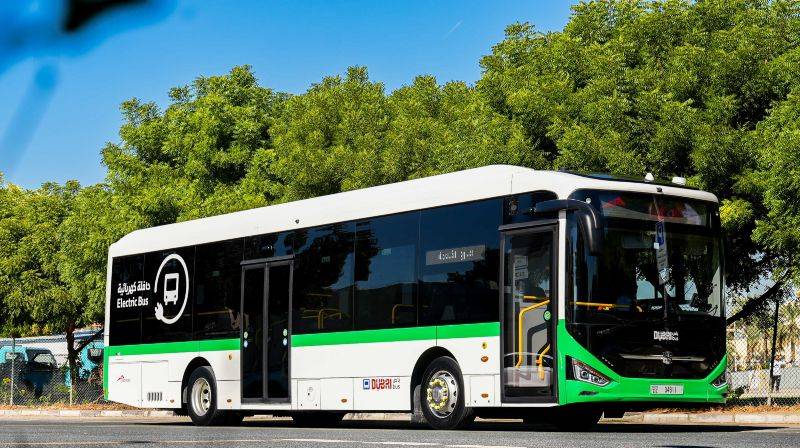
DUBAI – Dubai’s Roads and Transport Authority has taken delivery of the first batch of new buses under a major fleet expansion programme, receiving 250 vehicles as part of a wider contract to procure 735 multi-size buses compliant with the European Euro 6 low-carbon emissions standard.
The delivery marks a significant step in strengthening public transport capacity across the emirate, while advancing Dubai’s shift towards cleaner and more sustainable mobility solutions.
The initial batch includes 40 electric buses, representing the largest procurement of electric buses in the UAE to date and a first of its kind for large-scale urban operation in the country. The remaining buses under the contract are scheduled to be delivered in phases, with full completion expected in 2026. The programme is designed to meet rising passenger demand, expand geographical coverage and improve service quality across urban and inter-urban routes.
Electric rollout
Mattar Al Tayer, Director General and Chairman of the Board of Executive Directors of the Roads and Transport Authority, inspected the Zhongtong electric bus, which will be introduced on Dubai’s urban routes. The vehicle has been customised to suit local operating conditions and climatic requirements, following extensive testing and trial operations within the emirate.
The 12-metre-long electric bus has a single-charge operating range of up to 280 kilometres, allowing it to complete daily services without the need to return to depots for recharging during operational hours. It is powered by a battery with a capacity of 434 kilowatt-hours and supported by an ABB charger rated at 360 kilowatts, enabling efficient energy management and reliable service continuity.
أعلنت #هيئة_الطرق_و_المواصلات وصول الدفعة الأولى من الحافلات الجديدة البالغ عددها 250 حافلة، ضمن عقد يشمل 735 حافلة متعددة الأحجام، مطابقة للمواصفات الأوروبية الخاصة بالانبعاثات الكربونية المنخفضة، "يورو 6"، بينها 40 حافلة كهربائية تعدّ الأكبر والأول من نوعها على مستوى الدولة،… pic.twitter.com/GDo4v6JiUR
— RTA (@rta_dubai) January 18, 2026
Designed to accommodate up to 70 passengers, the bus is equipped with a 360-degree camera system and meets international safety standards, holding multiple global certifications. An advanced battery cooling system has been integrated to ensure consistent performance in high temperatures typical of the UAE climate. According to RTA, the bus underwent more than three months of inspection and trial operations in Dubai, with results confirming the stability of the electric propulsion system, efficient energy consumption and high safety standards across key systems.
The trials also assessed operational performance under real service conditions, including frequent stops, speed variations and extended operating hours. Performance indicators such as brake responsiveness, air-conditioning efficiency, cooling performance and vehicle stability met operational benchmarks, while surveys recorded a 95% satisfaction rate among drivers and passengers.
Strategic objectives
RTA stated that the procurement of the new buses aligns with directives aimed at delivering a sustainable and flexible public transport system that supports mobility for residents and visitors alike. The programme is also linked to Dubai’s broader urban and economic strategies, including enhancing quality of life, supporting major international events and strengthening the emirate’s global competitiveness.
The authority noted that the fleet expansion forms part of an integrated strategic plan to advance public transport services in line with international best practices. The plan focuses on maintaining high service standards, addressing continuous growth in ridership and positioning public transport as a preferred mode of travel across Dubai.
— RTA (@rta_dubai) January 18, 2026
In parallel, RTA confirmed that the number of electric buses operating in the emirate will increase gradually in the coming years. This approach supports national and local goals to reduce carbon emissions and achieve climate neutrality by 2050, while contributing to the Dubai Economic Agenda D33, which aims to reinforce Dubai’s position among the world’s leading urban economies.
The initiative also supports RTA’s Zero-Emission Public Transport Strategy 2050, under which all public transport buses, taxis and limousine vehicles are to be converted to zero-emission operation. The strategy targets a full transition of public transport buses to electric and hydrogen power by mid-century.
Fleet expansion
Beyond the electric segment, the contract covers a wide range of bus types designed to meet diverse operational needs. It includes 549 city-service buses, comprising 400 MAN buses and 149 Zhongtong buses, all built to Gulf specifications and equipped with Euro 6 environmentally friendly engines. These vehicles are classified as Class II under the United Nations vehicle classification system, enabling them to operate flexibly on both urban routes and longer inter-urban services.
— RTA (@rta_dubai) January 18, 2026
To support high-capacity corridors and densely populated districts, the contract also includes 76 double-decker Volvo buses and 70 articulated Isuzu Anadolu buses. These vehicles are intended to increase occupancy rates, improve peak-hour capacity and extend services to newly developed areas, contributing to wider network coverage across the emirate.
All buses have been manufactured to meet high standards of safety, comfort and quality, with specifications tailored to Dubai’s operating environment and passenger expectations.
Smart systems
The majority of the new buses are equipped with advanced smart technologies aimed at enhancing safety, efficiency and passenger experience. A Driver Behaviour Monitoring System has been installed to track driving patterns and improve performance through data-driven insights, supporting higher safety standards across the network.
An Automated Passenger Counting system records actual passenger numbers and cross-references them with the automated fare collection system, helping to improve data accuracy and reduce fare evasion. The buses also feature a Driver Identity Authentication system integrated with the operating platform, strengthening operational control and accountability.
Interior specifications focus on comfort and accessibility, with ergonomic seating, adjustable seat belts in family-designated areas and a low-floor entrance to facilitate access for People of Determination. Dedicated seating for children, spaces for bicycles, Wi-Fi services and mobile phone charging points have been incorporated, alongside high-quality interior finishes and a contemporary design reflecting Dubai’s modern identity.
RTA has also adopted a national standardised fuel-consumption testing protocol, the first of its kind in the Gulf region. The protocol is intended to improve operational efficiency, support financial sustainability and reduce environmental impact across the public transport fleet.